[From Rick Marken (2015.01.27.1730)]
RM: I’m changing this thread title to the one Bruce gave it so that we can keep these topics a little separate.
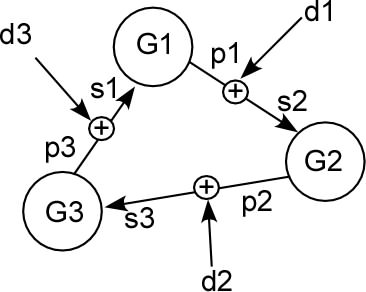
···
Martin Taylor (2014.01.27.14.27)–
MT: A rose is a type of flower. A flower is not a type of rose. Control
is a type of homeostasis. Homeostasis is not a type of control.
RM: OK, I’m sorry I misunderstood. Thanks to you and Bruce for setting me straight on this. This actually makes more sense. “Homeostasis” does seem like a general term referring to remaining in a stable state (“stasis”).
MT: Bruce Abbott has mentioned a type of homeostasis that is analogous
to a spring or a ball-in-a-bowl, in that the disturbance provides
the energy for the restoration of the status quo ante. Control
supplies the energy to oppose the disturbance independently of the
energy supplied by the disturbance.
RM: Yes, the kind of homeostasis Bruce mentioned is called “equilibrium”. The other kind is “control”. Both involve observing a variable return to and/or remain in a stable state. It’s easy to discriminate between those two kinds of homeostasis using the test for the controlled variable.
MT: I have previously shown a
generic form of homeostasis involving negative feedback, and told
you the conditions under which this is the standard form of control.
I don’t like repeating myself, so this time I will ask you to do
your own analysis.
RM: So is that a third kind of homeostasis?
Best
Rick
–
Richard S. Marken, Ph.D.
Author of Doing Research on Purpose.
Now available from Amazon or Barnes & Noble
[Martin Taylor 2014.01.27.22.58]
You forgot to include your analysis, so I don't know what you are
asking. Martin
···
On 2015/01/27 8:26 PM, Richard Marken
( via csgnet Mailing List) wrote:
rsmarken@gmail.com
[From Rick Marken (2015.01.27.1730)]
MT: I have
previously shown a generic form of homeostasis
involving negative feedback, and told you the
conditions under which this is the standard form of
control. I don’t like repeating myself, so this time I
will ask you to do your own analysis.
RM: So is that a third kind of homeostasis?
[From Rick Marken (2015.01.28.0915)]
···
[Martin Taylor 2014.01.27.22.58]
MT:You forgot to include your analysis, so I don't know what you are
asking.
RM: It’s OK. I think I understand now.
MT: I have
previously shown a generic form of homeostasis
involving negative feedback, and told you the
conditions under which this is the standard form of
control. I don’t like repeating myself, so this time I
will ask you to do your own analysis.
RM: So is that a third kind of homeostasis?
Best
Rick
–
Richard S. Marken, Ph.D.
Author of Doing Research on Purpose.
Now available from Amazon or Barnes & Noble
Rick, your tone is inappropriate.
···
[Martin Taylor 2014.01.27.22.58]
MT:You forgot to include your analysis, so I don't know what you are
asking.
RM: It’s OK. I think I understand now.
MT: I have
previously shown a generic form of homeostasis
involving negative feedback, and told you the
conditions under which this is the standard form of
control. I don’t like repeating myself, so this time I
will ask you to do your own analysis.
RM: So is that a third kind of homeostasis?
Best
Rick
–
Richard S. Marken, Ph.D.
Author of Doing Research on Purpose.
Now available from Amazon or Barnes & Noble
[Martin Taylor 2104.01.28.12.46]
Good. It does help when you do your own analysis, doesn't it? I used
to say that “reinventing the wheel” is the best way to understand
how a wheel works. I still think so.
Martin
···
[From Rick Marken (2015.01.28.0915)]
[Martin Taylor
2014.01.27.22.58]
MT:
I have previously shown a generic form
of homeostasis involving negative
feedback, and told you the conditions
under which this is the standard form of
control. I don’t like repeating myself,
so this time I will ask you to do your
own analysis.
RM: So is that a third kind of
homeostasis?
MT:You forgot to include your analysis, so I don't know
what you are asking.
RM: It's OK. I think I understand now.
