[From Bill Williams 24 January 2OO4 4:10 PM CST ]
Bill Powers (2004.01.24.0809 MST)]
Bill Williams 23 January 2004 --
Bill, you may remember decades ago when your dad showed me
what was then a manuscript copy of his _Leakages_ book. I
looked at it and pointed out that the assertion he made
that investment is a constant fraction of income was not
consistent with the data that I was familiar with. This
was the nicest possible way of putting it.
No it wasn't. The nicest way would have been to supply
the data you are familiar with,
I wasn't aware that there was an expectation that I
was expected to become you dad's unpaid research
assistant. This failure on my part was due I am sure
to my general lack of social perceptiveness. If this
expectation had been made explicitly clear years ago
then I could have told you to "Fuck off." and there
would have been a more of a mutual understanding. I'm
not for the time being available to be anyone's go_fer.
Just saying you have data to the contrary is like Joe
McCarthy waving those cards in the air on which he
said the names of hundreds of communists in the State
Department were written -- but which he never showed
anyone.
Having been described as a communist, and a fascist, I
Can now add to my list having been compared to Joe
McCarthy. I won't say that you've made my day, the
seminar did go well, but there is no question that you've
made a contribution.
My father cited his sources and reproduced the tables.
What did you cite?
Actually I didn't cite anything. When I talked to your
dad it had been years since I'd taken the business
cycle course. About all I had was the visually
impressive memory of the plot in which the Great
Depression made a great notch in the plot of income
and investment. The notch was even more impressive
in the case of investment than it was for income.
At the depth of the depression, given the inaccuracy
of the data, I wasn't implausible to think that the
rate of investment might have been zero.
And, it was clear your dad was not of a mind to
consider a fundamental modification of his position.
I pointed out that his claim about the constancy of
the proportion of investment to income was a
controversial one. He was curtly dismissive of
the possibility that he might be mistaken.
Bill Williams Almighty, that's what.
I am not at all sure who you think you are talking
to. Could it be possible that you getting me confused
with some other significant figure in your life?
This is a landmark day, first I am compared to Joe
McCarthy, and now I am being compared to the
Almighty. Off hand, this isn't a combination that
would have occurred to me. Forced to make a choice
I would rather be God Almighty than tail gunner Joe.
I have difficulty understanding what is generating
this and other such vitriolic comments. Sorry, I
can't seem to help saying things that are a bit
snide. Putting aside the sarcasm I really think I'm
beginning to get a bit of a clue as to what is going on.
I wouldn't think I was of such significance in your
life that I would evoke this sort of extra-ordinary
vehemence. Have by any chance you heard of this
psychological concept called "transference." Freud
is so much more inherently interesting than Keynes.
Maybe in the future we might consider discussing
Freud rather than Keynes. Anything would have to be an
improvement over the appendix to the chapter on User
Costs.
I wasn't confrontational in pointing this out -- I didn't see
any reason to ruffle his feathers. If an old duffer
wants to try to set the world straight-- more power to
him. As I expected he would, your dad firmly assured me
that his numbers were correct, and he didn't need my help.
What did you do to prove the contrary?
Bill you seem to be in need, among other things, of a
reality check. Do you remember who your dad was? Do you
think it could be possible that you've forgotten who
he really was? Could this be a part of the problem?
Anyway, there wasn't the slightest chance that anything
I could say I was going to "prove"
anything to your dad. If you remember, which I wonder
about, you couldn't "prove" anything to him either. It
has probably been a while, so take a look at some his
comments on your work. "Prove" it to TCP-- give me
a break.
Nothing but huff and puff and wave those blank cards
in the air.
Actually your dad and I got along quite well. There
wasn't any of this "huff and "puff" stuff- Oh, I see
now, you are back to attributing to me the same
qualities that were characteristic of McCarthy. If
it is all the same to you, I really would prefer
being adressed as the Almighty
Actually your dad and I got along just fine. I had
a relation who was a German officer on the Northern
Russian front, so I know how to interact with an
Elderly Prussian. I must say, they have qualities.
I may not have been able to communicate with your
dad that well, but he could talk about concrete
endlessly. And, fortunately I have an interest
in concrete myself. So he talked about concrete
and I listened. And as a result our discussion of
concrete, rather his lecture on concrete, was a
great success. I know enough about the problems
involved with the weathering of concrete so that I
could object when he introduced simplifications that
to some extent were not quite true. I was able
therefore give him the impression that I really did
understood part of what he was saying. And, that
apparently resulting in thinking that his lecture was
worthwhile.
I think your dad our enjoyed our talk, or rather
his talk. I know I did.
But, as I remember it, he wasn't at all impressed
with me. Despite my knowing a little bit about
concrete. If I had told him what I really thought
about his effort to revolutionize economics, do
you think we would have gotten along even better.
I don't think so.
This is what I mean by your liking for withholding
information so you can pounce on others later for
not having known it.
"Withholding information" you say.
I most assuredly did not withhold information from
your dad. None of the stuff I know is exactly a state
secret. It isn't in my power to as you say "withhold
information" from anyone in regard to basic economic
information. Have you heard of these things call
libraries? They are sort of like churches, and some
of us went to them before their was an internet. In
them are manuals, texts, and instructional
programs that are freely ( their may be a small fee)
available to anyone. Or, am I confused again. Do I
in fact have the power to keep people ignorant? I
don't think so. Not even my condescending attitude
has that sort of power.
And, anyway I don't believe in taking advantage
of people in the way you describe. However, if when
I attempt to point something out to someone, and they
dismiss what I am saying, and insult me, I do not feel
that I have any obligation to forcibly insist that
they permit me to inform them. Another psychological
concept came to mind, no not abusive families, though
there are possiblities here, what
I was thinking of was the idea of a "double-bind."
You ought to keep in mind that communication is a
two port process. Do I have any obligation to batter
someone down and force them to acknowledge my
superiority in regard to information? Obviously
not.
The premises upon which you are proceeding here are if
not clinical, at least moderately socio-pathological.
Note that you are referring to a MANUSCRIPT that
was given to you for review.
I think that I was aware of this, but your point is
duly acknowledged. I didn't for instance think that
I had been given the Manuscript so that I could start
a fire with it.
If you had communicated what you knew
I repeat, communication is a two port process. But, to
extend my clarification, you may wonder why, or maybe
you don't, I am engaging in this exchange. Any reasonable
person reading these communications, will I think, come
to the conclusion that very little is being successfully
communicated between us. However, there is an audience.
And, I think this audience may find these posts
informative.
(assuming that you actually knew something,
Given that I have been,as they say, "granted" an MA and a
Ph.D. in economics it seems evident that somebody somewhere
at one time at least suspected that I knew "something."
Kenneth Boulding, who never bothered to take an advanced
degree in economics always told students that it was, on
the average, easier to take the doctorate, than to spend
the rest of your life explaining to people why you didn't
have one. At least I knew this much, which is more than
you can say.
Let say that I _suspected_ that something wasn't right.
You ought to understand that while I knew about the
various business cycle theories from books, I had never
encountered a crank, except for people who hung around
at economics conferences. There aren't any courses in the
econmics curriculum offered in how to deal with crack-pots.
I was sort of feeling my way along not being sure what
was proper. Do you tell people "This is crap." Or,
just what should you do? It probably doesn't matter, what
ever one does, people are going to find fault.
I am sure you have met up with crack-pots. What do you
do? And, what has been the result?
perhaps you could have seen to it that better data
were used, assuming they exist anywhere but in your
imagination.
I will have to admit to sharing the collective delusion
That appears on p. 49 in wally Peterson's book, and many
other places as well.
TCP not Bill Williams was the prospective author of this
tract. I wasn't in a position to "see to" anything what-
so-ever. It was my impression that no one genuinely
wanted my actual opinion. What was I supposed to say,
"This is a complete crock." If you actually wanted
a professional opinion on the merits of your dad's
economics you could have gotten in line like everyone
else and attempted to publish his work with something
other than a vanity press. Then you would have gotten
an impersonal unbiased, professional assessment of the
merits of what your dad's - I'm not going to call it
work -- written.
But that isn't your way, is it?
I think I behaved, despite my inexperience, that i
behaved reasonably well in the situation.
When your dad rejected what I had to suggest, I let
it go. Am I to be held responsible that he went on and
published (vanity press).
When a mother shows you her new born, what do you tell
her? Do you say, "Obviously this kid is never going to
win a beauty contest. You really ought to get a sack
and cover her head." I don't think so.
Over the years, from time to time I've pointed out that
the claim that investment is a constant fraction of
income, which is an important part of your dad's
_leakages_ thesis, is contrary to the historical record
of national income accounting reports of investment and
income
You make it sound as if TCP made up these numbers.
Not at all. There is nothing in what I say above that says
anything at all about how TCP arrived at the numbers he
used to justify his opinion that the rate of investment
is in constant ratio to the rate of income.
In the above I haven't even said your dad's
figures are wrong. What I've said is that the numbers
you dad used are "contrary" to those that are usually
used in describing income and investment. And, that
whether or not I am right about my dubiousness regarding
your dad's numbers, I did and repeatedly did, make a
substantive contribution.
That your dad's numbers were controversial was well
known. This isn't news to you, I remember you bragging
about this. You assumed your dad had it right. You
never, your self, checked to see how he had gone about
this "innovation."
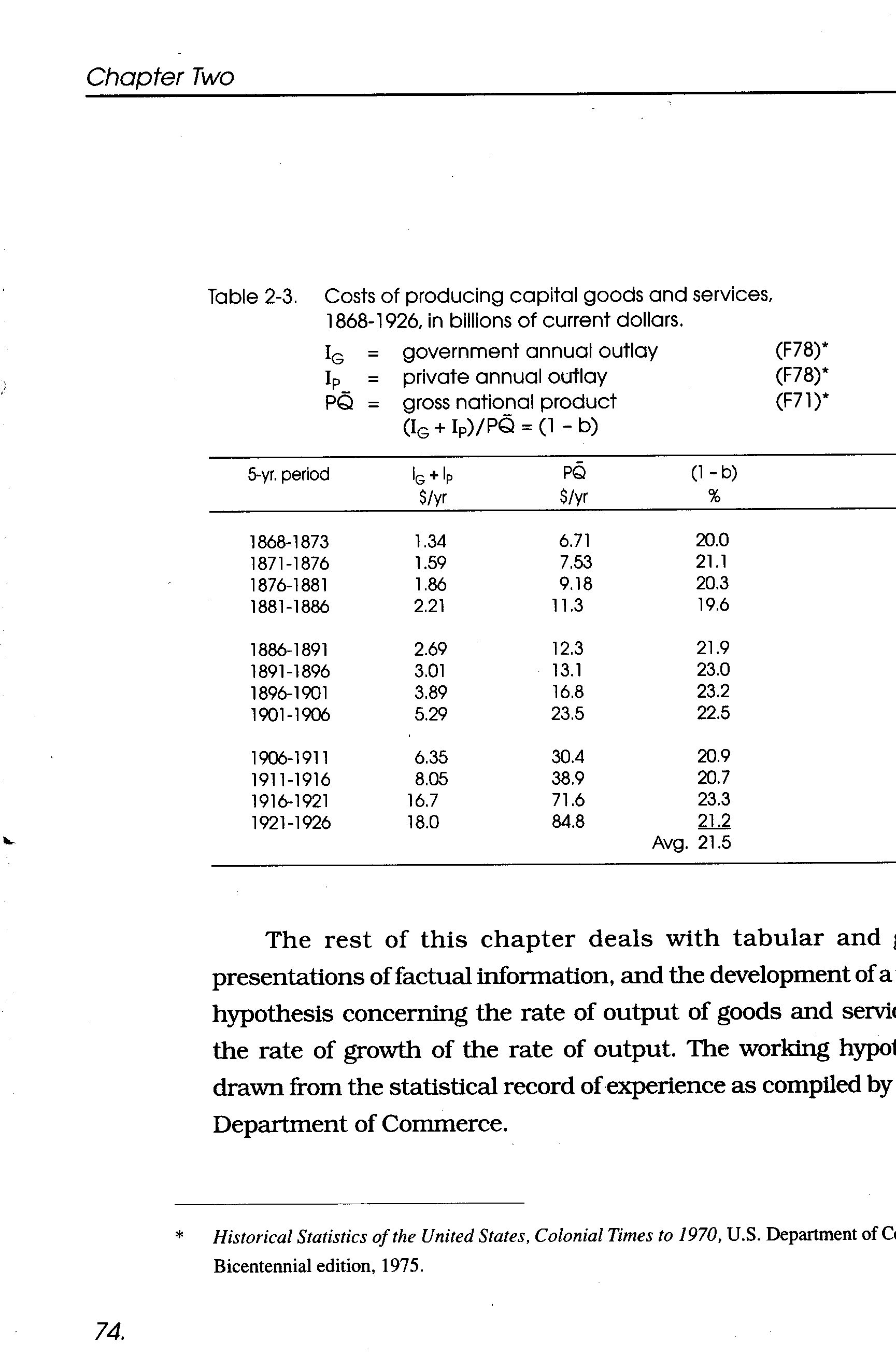
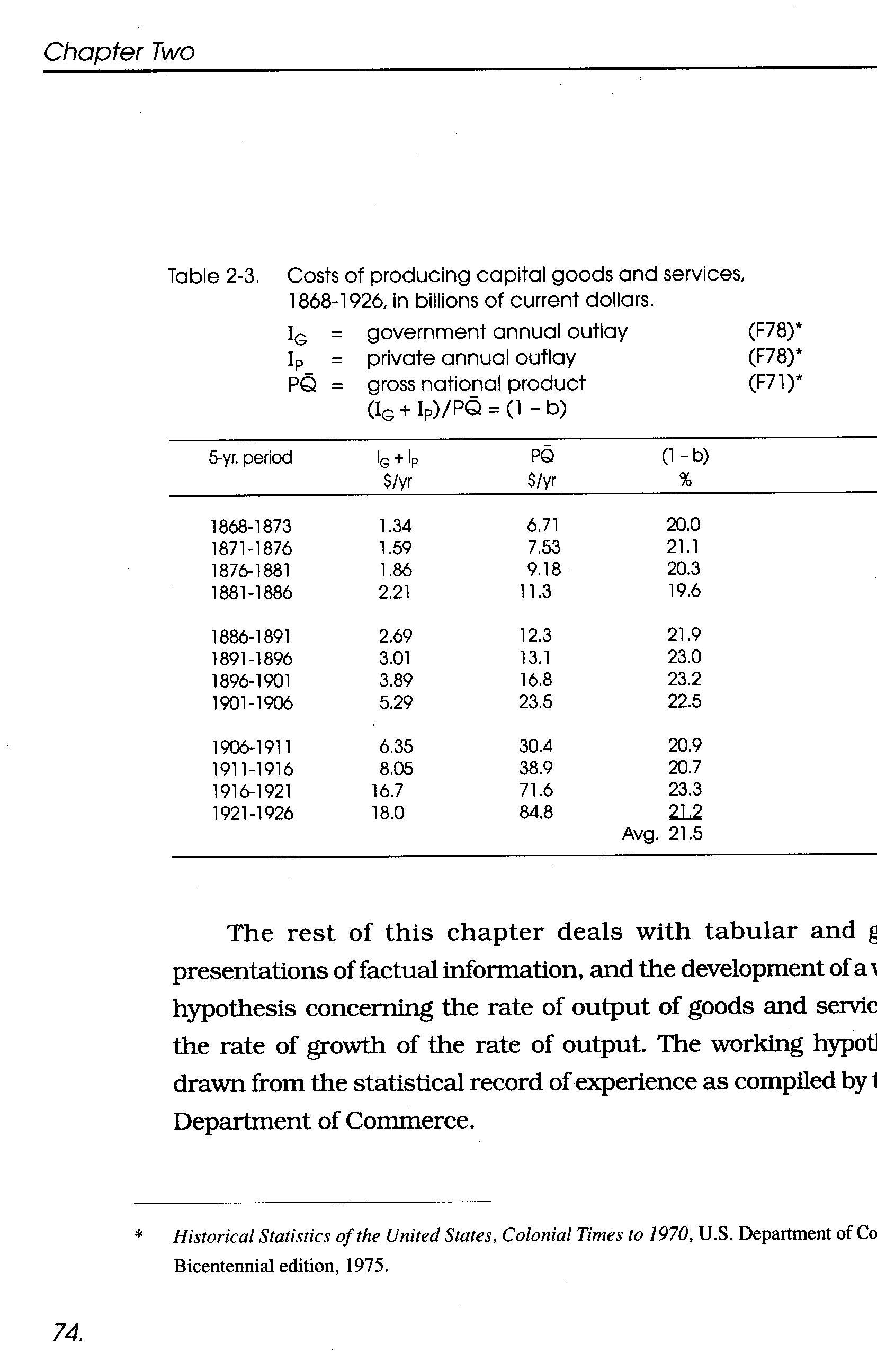
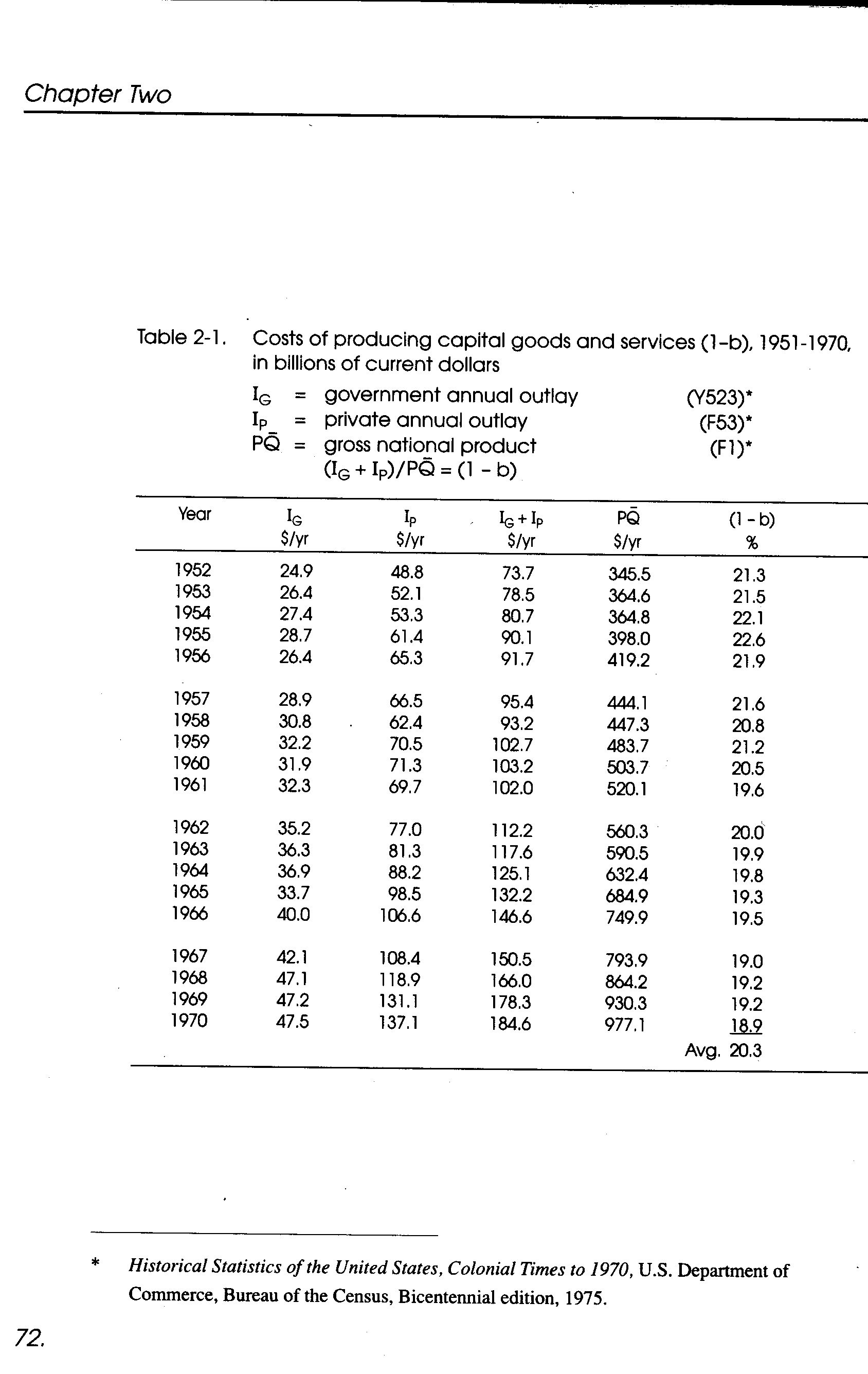
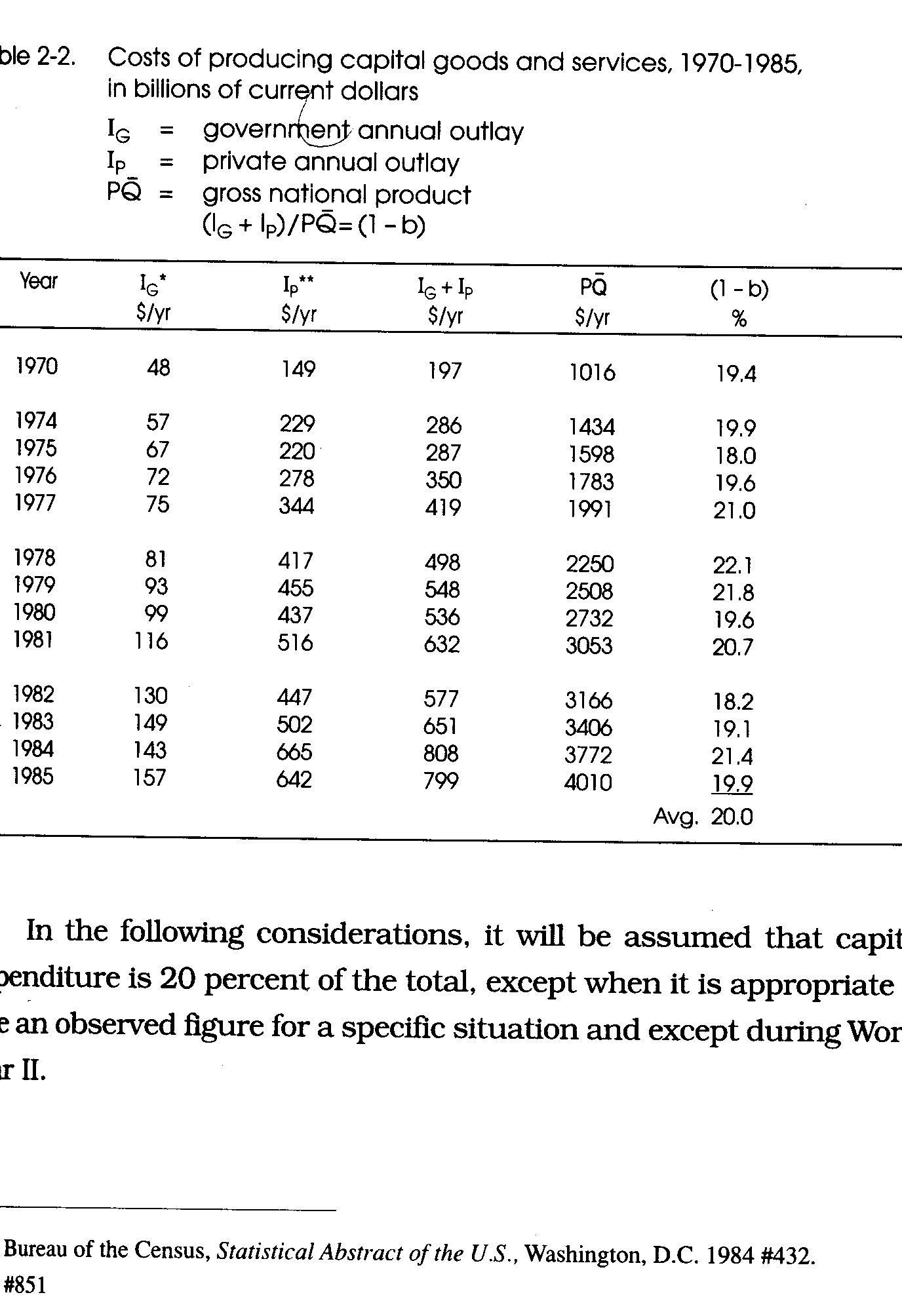
He got them from the Statistical Abstracts and related
sources. You will find the relevant tables of data on
pages 72, 73, and 74 of Leakage,
I am genuinely sorry to have to tell you that I don't
have a copy of your dad's book. In fact I have never as
much as looked inside the covers. The library here at
UMKC doesn't have a copy either. But, that is beside the
point. Can you think of any reason why I should spend
my time reading your dad's book? Remember there are lots
of books out there that are recognized as being
worthwhile that I have yet to read. I may have better
things to do.
In the recent past you have informed me that I'm no
friend of yours. (In case you are wondering, I didn't
shed any tears.) I've been told "to stuff it." and
what all. My best judgment is that, curiosity aside,
it would be a poor use of my time to read your dad's
book. Don't have a copy of Rick's _Mind Readings_ either
when I attepted to purchase a copy I was told that the
Mind Readings book had sold so well it was out of stock
and they were eagerly awaiting a second edition.
Now, decades after I first pointed out to your dad that he
might want to reconsider his assertion the one about the
role of investment in the economy, you say, that I have been
unwilling to
offer any substantive discussions which run the risk
of committing to simple statements of fact.
We can cut to the chase here.
So, you aren't going to admit that I did in fact take
the "risk" and that I actually did "commit" myself to
"a simple statement of fact." I am not however entirely
a fool. I said what I said in a way that made it easy
for someone who didn't genuinely want to hear what I had
to say, to listen to my objection without "going nuclear."
You can say, "I'm not sure that the conventional opinion
would agree with you." And, if the person you are talking
to has a swelled head, they will acknowledge the truth of
this with pride. Then you can say, "Have you compared the
results that you get with the standard analysis?" And, they
affirm that "The standard analysis is completely mistaken."
You can even ask them, "What about the pro-cyclical nature
of private gross investment?" They won't neccesarily know
what these words mean. They could ask what they mean, but
they won't. And, if one is really daring one could ask,
"But, suppose I calculate capital depreciation as being in
proportion to utilitzation? That would generate a fixed
ratio between GNP and investment woldn't it? Is that what
you are doing?" The answer you can expect is, no, no, no.
I guess what Bill expects me to do is tell people they have
shit for brains. By-the-way, does anyone recall Marken's
middle initial?
I think the evidence that
I did is unquestionable. See Rick's post a year ago for
textual evidence. But, are you going to admit that the
statements you have made about were mistaken and
excessive?
All during this interminable post,
Please don't whine, we didn't have to do this. You could
have stuck by your just "stuff it." resolution, or your
several statements that: this discussion is closed , so
I am not sympathetic if you are getting tired.
Instead I will say, I can see that you chose to engage in
this dialog. Why, you chose to do so is somewhat of a
mystery.
Maybe you should explain what you get out of this exercise.
while leaping from one unwarranted conclusion to the
next like a hysterical mountain goat,
You can ask Rick, but in my opinion this passage "needs work."
My suggestion is that it doesn't work because it doesn't come
close enough to the sort of
impression most people have of me to be entirely plausible.
you keep returning to this Big Mistake about the role
of investment.
Should I concede that a couple of cranks have defeated me?
Not quite yet.
The role of investment is, after all, a crucial question
in macro-economic theory. And, your dad denys that investment
has anyrole at all in determining the level of income.
And then,. finally,
Yes, we are almost finished. But, I thought I was rid of
you when you told me to "stuff it."
you actually introduce a substantive argument:
Then you do admit that you were telling a bit of a fib,
when you claimed that I'd never contributed "anything?"
<Let me remind you of what you said.
If one is concerned with the factors that determine
The level of income, as your dad's Leakages scheme is,
then investment is an important variable. So, consider
the numbers in the table below. Do these numbers support
your dad's leakages argument that investment is a constant
proportion of income? I don't think so.
Table 2 GNP etc p. 49. Peterson
Income Investment
1929 $ 103.9 $ 16.7
1933 $ 56.0 $ 1.6
1940 $ 100.4 $ 13.4
1945 $ 213.4 $ 11.3
1950 $ 288.3 $ 55.1
1960 $ 515.3 $ 78.2
Wallace C. Peterson and Paul S. Estenson 1992 _Income,
Employment, and Economic Growth 7th Edition_ New York:
Norton The first edition was printed in 1962.
Bill Powers says,
>Unfortunately I can't answer your question
I don't believe you. I could be wrong but I think you
could answer the question. The question is whether
I have ever made a single substantive contribution to
CSG.
Off hand, I think, like recall the guy who fucked more
than one pig? I may have made more than one such
contribution. But, since the claim that you made that I
hadn't made a single such contribution, may I point to
my program the simulates the Buridan's Ass paradox? I
think the word you used to describe it at the time was
"brilliant."
I hope you can see, Bill, that the criticisms of TCP's
statements about investment that you have been repeating
for many years are based on a hasty reading of what he
said was constant, and that what he found was a very
important and remarkable fact which economists have
apparently failed to notice.
Since I don't have access to the book, I can't as you
say "see" much of anything of the sort.
Understand that the only copy of _Leakages_ that I've
ever read even in part was the copy of the early version
of the manuscript.
How the manuscript compares with the later published
copy, I have no way of knowing.
You wrote above concerning my "criticism" of your dad's
statements concerning investment. However, if you will
look at the posting in which Marken said he would
check out the difference between the Keynesian
understanding of the relationship between income and
investment and your dad's-- look at how I phrased the
issue. It wasn't a criticism. Rather what I did was to
point out that there was a very significant difference
between the relationship between data for GNP and Gross
investment which depict investment as far more variable
than income, and the numbers your dad provided and
the relationship he claimed existed between investment
and income.
One way your dad could have gotten the numbers he did
was to use the data reported as and I don't have
ready access, this moment to data, is a number for
something like "capital expense," or "capital depreciation"
or something of the sort. What it would be would be
a report of the volume of capital written off the books.
I don't know the numbers, but suppose the write-off is
15 % which I think is close to the rate currently in
effect. Each year then a number
pops up that is 15 % of the total book value of capital.
This is purely an accounting transaction. It is a calculation
That the firm, or other economic agents make regarding the
Wastage or wearing out of plant and equipment. Keynes has
A passage in the general theory explaining this. Anyway,
there is not between agents transaction involved and there
is no, or not a very close, relationship between this number
and the actual using up, rusting out, or obsolescence of
capital equipment. This number is much more stable than
capital expenditures that are purchases of real assets -
such as plant and equipment. The add in, or subtract out, the
depreciation of plant and equipment that is computed on
the rate production and associated wear and tear.
Actually it just occurred to me that the relationship that
your dad reported is one that corresponds EXACTLY to
capital depreciation when this depreciation is figured as
proportional to the rate production or GNP. If what I am
thinking is true, you might see a change in this number when
there has been legislative action to change the tax and
accounting regulations.
I have to make my own decision about where to distribute
my efforts. There are lots of things that I could be
doing that can be expected to generate worthwhile results.
If you, or Rick want dig into how your dad got the numbers
he did, I won't withhold giving you an opinion concerning
what you find. But, I don't see that there is any reason
for me to become your flunky. Not when you do things like
threaten to bite me when you think I have a condescending
attitude.
For your information I have a constitutional right not
only to a condescending attitude but also to an
expression of that attitude. In light of your threat to bite
me, I warn you that if the threat, absurd as it obviously
is, ever becomes at all plausible I will shoot you.
Obviously, you are not someone I want to work for-- even
If your dad wasn't, as he is, hovering in the not so distant
background when economic questions are involved.
Bil