Does anyone have any data on CSGnet member numbers over time?
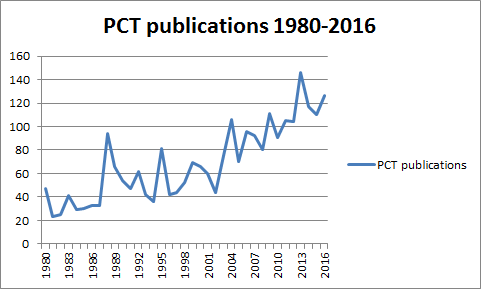
I’ve been looking the number of publications citing B:CP since 1980 as a measure of PCT researcher growth.
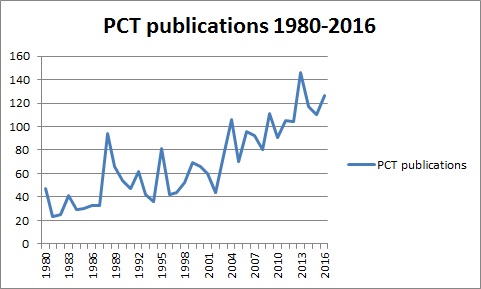
Looks like a shallow linear growth line till around 2000, then steeper linear growth from then. Anyone know what changed at that point?
···
Cheers,
**Sean Mulligan **
[From Rick Marken (2017.05.28.1400)]

···
On Sun, May 28, 2017 at 8:41 AM, Sean Mulligan lack.of.inspiration@gmail.com wrote:
SM: Does anyone have any data on CSGnet member numbers over time?Â
RM: I don’t. But my impression is that attendance at CSG meetings (which reflects the most active segment of membership each year) has held pretty steady at about 40. Overall membership has probably declined somewhat over the years.Â
Â
SM: I’ve been looking the number of publications citing B:CP since 1980 as a measure of PCT researcher growth.Â
Looks like a shallow linear growth line till around 2000, then steeper linear growth from then. Anyone know what changed at that point? Â Â
RM: Very interesting. Yes, it looks like there is an inflection in the B:CP reference rate between 2000 and 2005. I think what changed around this time that might have something to do with this is the publication in 2005 of the 2nd edition of B:CP.Â
Best
Rick
Â
Cheers,Â
**Sean Mulligan **
–
Richard S. MarkenÂ
"Perfection is achieved not when you have nothing more to add, but when you
have nothing left to take away.�
                --Antoine de Saint-Exupery
(Sean Mulligan 2017.05.29.11.31)
I expected it to be an expotential curve…or maybe even a log curve with a saturation point.
It should be expotential…researcher publishes - influences 2-3 grad students. They publish - cycle repeats.
Cheers
Sean
···
On Sun, May 28, 2017 at 8:41 AM, Sean Mulligan lack.of.inspiration@gmail.com wrote:
SM: Does anyone have any data on CSGnet member numbers over time?
RM: I don’t. But my impression is that attendance at CSG meetings (which reflects the most active segment of membership each year) has held pretty steady at about 40. Overall membership has probably declined somewhat over the years.
SM: I’ve been looking the number of publications citing B:CP since 1980 as a measure of PCT researcher growth.
Looks like a shallow linear growth line till around 2000, then steeper linear growth from then. Anyone know what changed at that point?
RM: Very interesting. Yes, it looks like there is an inflection in the B:CP reference rate between 2000 and 2005. I think what changed around this time that might have something to do with this is the publication in 2005 of the 2nd edition of B:CP.
Best
Rick
Cheers,
**Sean Mulligan **
–
Richard S. Marken
"Perfection is achieved not when you have nothing more to add, but when you
have nothing left to take away.�
–Antoine de Saint-Exupery
Well, my PhD thesis was published in 2000, but that’s probably
nothing to do with it.
How did you generate that graph?
···

Regards,
Rupert
On 28/05/2017 16:41, Sean Mulligan
wrote:
Does anyone have any data on CSGnet member numbers over time?
I've been looking the number of publications citing B:CP
since 1980 as a measure of PCT researcher growth.
Looks like a shallow linear growth line till around 2000,
then steeper linear growth from then. Anyone know what changed
at that point?
Cheers,
**Sean Mulligan **
[Sean Mulligan 2017.05.30.10.34]
In light of this, I propose the period before 2000 to be know as BR - or Before Rupert
Did it up in five minutes using google scholar, just searched for citations for each year.
···
On Tue, May 30, 2017 at 12:24 AM, Rupert Young rupert@perceptualrobots.com wrote:
Well, my PhD thesis was published in 2000, but that's probably
nothing to do with it.
How did you generate that graph?
Regards,
Rupert
On 28/05/2017 16:41, Sean Mulligan
wrote:
Does anyone have any data on CSGnet member numbers over time?
I've been looking the number of publications citing B:CP
since 1980 as a measure of PCT researcher growth.
Looks like a shallow linear growth line till around 2000,
then steeper linear growth from then. Anyone know what changed
at that point?
Cheers,
**Sean Mulligan **
Cheers,
**Sean Mulligan **
Mental Resilience Australia
(Angus Jenkinson 2017.5.5 16:53 BST)
What I have been doing is reading New Scientist and what I see, and have watched over the last two decades, is an increasing acceptance that the existing paradigms are not up to scratch. Biology (e.g.) has been revolutionised with genetic drift and the move away from neo-Darwinism and an increasing amount of general journalistic cover of the idea that new ideas are required. This often first translates into remakes of old ideas, as in reductionist versions of complexity theory. But the appetite for fresh ideas is definitely there. Complementing this is a radical transformation in society. People have seen the way the Internet, apps and social media along with mobile are changing mores in significant ways. Businesses are scrambling to keep up, so are governments. Which means an awful lot of thinkers are in the frame that they need to learn new ideas. At the same time, there are many more voices agreeing that the economic and political systems of contemporary capitalism need redesign – not just the populist vote expressing its disappointment, but serious thinkers from all sorts of discourses. So it may be a combination of the PCT community growing and doing a better job and the environment into which it is speaking becoming more receptive to new ideas?
…………………………………………………….
Angus Jenkinson
···
On 30/05/2017, 01:34, “Sean Mulligan” lack.of.inspiration@gmail.com wrote:
[Sean Mulligan 2017.05.30.10.34]
In light of this, I propose the period before 2000 to be know as BR - or Before Rupert
Did it up in five minutes using google scholar, just searched for citations for each year.
Cheers,
**Sean Mulligan **
Mental Resilience Australia
On Tue, May 30, 2017 at 12:24 AM, Rupert Young rupert@perceptualrobots.com wrote:
Well, my PhD thesis was published in 2000, but that’s probably nothing to do with it.
How did you generate that graph?
Regards,
Rupert
On 28/05/2017 16:41, Sean Mulligan wrote:
Does anyone have any data on CSGnet member numbers over time?
I’ve been looking the number of publications citing B:CP since 1980 as a measure of PCT researcher growth.
![nline image 1]()
Looks like a shallow linear growth line till around 2000, then steeper linear growth from then. Anyone know what changed at that point?
Cheers,
**Sean Mulligan **


