[From Bruce Nevin (2017.01.04.16:39 ET)]
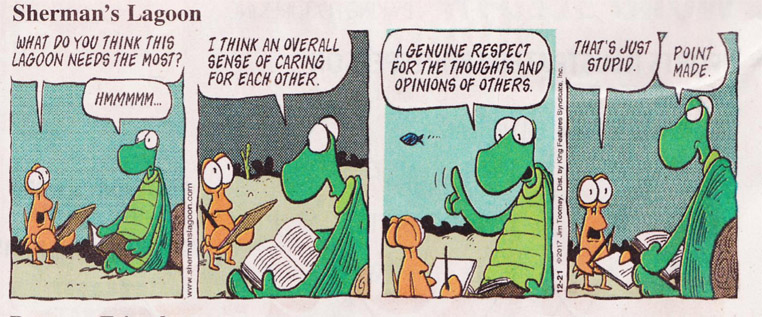
I try to remember and control for a general principle that people do the best they know how, and that we all are capable of learning so that we know better. I believe that Boris means well, according to his lights, and is doing the best that he knows how. But he can learn to know better.
In the canonical control diagram the dotted line separating the organism from the environment is generally understood to coincide with the skin of the organism, where sensors initiate the firing of neurons and where physical movement brings limbs with their sensor-bearing skin into contact with things in the environment., exerting measurable forces on them In a study of motor control, q.i is a measurement of the state of something in the environment, a perception of which the subject is controlling, and q.o is a measurement of force upon that something in the environment resulting from physical movement or exertion by the subject. Both q.i and q.o are quantitative measurements taken by an observer. However:
“I consider the behaving system to be the nervous system, and everything else, including the muscles and the body they operate, and effects on the outside world, the environment. The input boundary consists of all the sensory receptors; the output boundary, all the motor nerve-endings. This division allows me to treat all levels of control alike, with the feedback loop always being completed by a path from output to input through the environment.”
– William T. Powers 7/29/85 letter to Phil Runkel [repr. pp. 2-3 of Dialogues Concerning Two Life Sciences]
Obviously, q.o as a quantitative measurement taken by an observer, is not at the output boundary so defined. That is, q.o is not the rates of firing at the motor nerve-endings, except in some of Henry Yin’s work. In the usual way of doing e.g. a tracking experiment, the output and input boundaries are at different physical locations. The sensory receptors (or perhaps the nerve-endings connecting to sensory receptors) terminate e.g.in the skin of the hand or in the retina, but the motor nerve-endings terminate in muscles under the skin.
The context of this statement is that it is part of Bill’s explication to Phil of “Quantitative analysis of purposive systems: Some spadework at the foundations of scientific psychology”, Psychological Review 85 (5):417-435 (1978) [repr. Living Control Systems 129-165]. It may be that when he says “I consider” thus and so, he means that this is what he assumed in that particular ground-breaking 1978 paper. Or it may be that when on other occasions he spoke of the dotted line in the diagram as coinciding with the skin he was speaking loosely. His stated motivation is to simplify the description, but isn’t the same simplification available if the output boundary is where ‘effectors’ (his word, on other occasions) exert forces in the environment?
I recommend exposure to the variety of ways that Bill and others have written about control over the years–various books and papers, the published correspondence with Phil (the book cited above), the CSGnet archive.
One reason for bringing this up is to show the folly of demanding fidelity to the specific words that Bill used in a particular discussion of control. We need to be careful how we use words, yes, but the words are secondary to the dynamic relationships to which they refer. Mathematical formulations are more precise, but they are derivative of language, in equations that are routinely ‘read out’ using language, and they, too, are secondary to the relationships that they describe. Studying the quantitative relations in the many demos, with help of the equations and of the accompanying verbal explanations, is an exquisite guide. But you have to actually do that studying so that you know what the words and the equations are saying. Then, given an apprehension of those dynamic relationships, alternative means of description are perfectly adequate; but given a failure to apprehend those dynamic relationships, the most precise descriptive statement is inadequate for the recipient, until she or he lets go of the pointing finger and grasps what it is pointing at.
···
On Mon, Dec 25, 2017 at 10:29 PM, Richard Marken rsmarken@gmail.com wrote:
[From Rick Marken (2017.12.25.1930)]
Rupert Young (2017.12.23 17.55)–
RM: Hope that’s all perfectly clear!
RY: Broadly, yes. Though I think there isstill some terminology that needs some clarification. For the
moment can we forget about the observer, to simplify things by
removing some variables from the discussion, such as q.i.
RM: OK, I’ll give it a try. Â
RY: What external variables arestabilised?
RM: Depends on what you mean by "external variables". Seebelow. Since I take “external variables” to be synonymous with
“aspects of the environment” then vertical optical velocity,
d(arctan(z/(x-fx)/dt and horizontal displacement, arctan
(y-fy)/(x-fx) are external variables that are not only
stabilized, they are controlled.
RY: So, here is a bit of confusion for me as youappear to be using “external” in two different ways (perceptual
variables are not external to the fielder, yet are “external
variables”). Would you clarify?
RM:Â Bill used the term “external variable” or “variables external to the controller” to describe perceptual variables that are experienced as being “out there”. When a fly ball is hit towards you, you can see its vertical and horizontal movement as being “out there” where the ball is. Higher level perceptions, like the perception of the degree to which someone is carrying out the principle of being honest in his dealings with the electorate, for example, seem more “internal”, like cognitions. But both “external” and “internal” perceptions are perceptual aspects of the physical environment – environmental variables.Â
Â
RY: Is it correct that vertical optical velocity and horizontaldisplacement are perceptual variables (i.e. perceptual signals) on
the internal side of the perceptual function, of the controller?
RM: Yes, a perceptual variable is assumed to be the output of a perceptual function.Â
Â
RM: As I said. "aspects ofthe environment" is synonymous with “perceptual variables” but
this phrase is used when we want to avoid giving the impression
that we are referring to a perceptual signal in a particular
individual; “aspects of the environment” are perceptions that can
be had by anyone with the appropriate perceptual functions.
Indeed, “aspects of the environment” are things like the colors,
shapes, movements, events, relationships, principles – that is,
the things we see as “external variables” in the world.RY: Perhaps, then, the terminology of "aspects of the environment"is only relevant if we are including the “observer” in
the discussion?
RM: I don’t think so. “Aspects of the environment” describe possible functions of environment variables – the later being the variables of physics and chemistry that we believe to be what is actually out there. These functions exist whether anyone is actually computing them or not. Area is an example; it is a function of environmental variables that it is possible to compute, whether anyone – observer or controller – is computing it or not.Â
RY: Are environmental variables the same asexternal variables (if we are omitting the observer from the
discussion)? If so, would it be correct to say that, in this case,
no external variables are controlled?
RM: I try to limit the term “environmental variable” or “environment” to the physical variables that are thought to be what s actually “out there” while I try to use “external variable” to refer only to functions of environmental variables that seem, when experienced, to be external to the perceiver. What Bill (and I) call an “external variable” could correspond to an environmental variable. For example, I think the “intensity” perception of weight is pretty directly proportional to a force vector created by gravitational acceleration. But once you get above intensity perceptions, I think we are dealing with external variables in the sense of functions of physical variables that, when computer by our perceptual functions, are experienced as being external to us.
RY: It would be useful if we could clear up these points beforegetting back to including the observer’s perspective.
RM: I think “external variable” is a rarely used term. I think the clearest way to think of this is that, in PCT, “environment” or “environmental variable” always refer to physical variables external to our sensory systems; “perceptual variable” always refers to a function of environmental variables, whether this function is actually being computed by a perceptual function in an observer, controller, machine, etc or not. And “external variable”, when it is used, refers to a perceptual variable that is experienced as being out there, in the environment.
RM: Here’s another way to think of it. Think of “environmental variables” as a time varying spatial array of random intensity pixels, like the noisy picture on a TV when there is no signal. Perceptual variables are all the possible different functions of this times varying array. Obviously, there are a gazillion possibilities. It turns out that, unlike the TV noise, the environmental variables that are the array of pixels that surround us do not vary randomly (they are not a booming, buzzing confusion; this is what Gibson realized); they are apparently structured so that some functions of this array are better to control than others. The functions that are better to control – that, when controlled, result in behavior that is more “adaptive” – are the perceptual variables that we are familiar with as “the real world”. They are the perceptual variables that you are trying to give to your robots so that they control int he same way people do. We know what a lot of those perceptual variables probably are – perceptions of distance, of shapes (objects), of rates of change, etc. In PCT we just want to map out those perceptual variables more precisely and find out how control of one kind of variables is used as the means of controlling others. At least, that would seem to me to be the first step.
RM Merry Xmas to all. What’s not to like about a holiday where you celebrate the birth of a nice Jewish boy! Mazeltov!
BestÂ
Rick
Â
  Regards,

  Rupert
–
Richard S. MarkenÂ
"Perfection is achieved not when you have nothing more to add, but when you
have nothing left to take away.�
                --Antoine de Saint-Exupery